University of Technology Nuremberg (UTN) celebrated its fifth anniversary yesterday with a ceremony attended by around 300 guests. Under the motto “UTN. 5 Years. Then. Now. Next.”, members of the university community and guests from politics, business, and society reflected on UTN’s initial development phase and looked ahead to the opportunities and challenges of the coming years.
“UTN was founded on an innovative concept developed by an international commission. In the first five years, key elements of this concept have already been successfully implemented, such as bringing people from different disciplines conducting research, teaching, and learning together,” said Founding President Prof. Dr. Michael Huth in his speech. “But the world has also changed rapidly over the past five years. UTN is taking these changes into account as it continues to develop, for example through its focus on artificial intelligence. Our ambition is to build an internationally outstanding university of technology where scientific discoveries lead to new and effective solutions for business and society. We are confident that strong, lasting partnerships in the region and around the world will enable us to achieve this goal in the long term.”
A Living Lab for the Academic System
In her video message, Federal Minister of Research, Technology and Space Dorothee Bär underscores this ambition: “Your innovative approach, your new organizational structure, and your fresh perspective on learning – all of this points the way to the future.” Referring to the German Science and Humanities Council’s assessment of UTN’s founding concept, she emphasizes that UTN could serve as a model for the German higher education system. Her words of encouragement to the university: “You are pioneers. Please keep it that way!”
UTN was established on January 1, 2021, as Bavaria’s first newly founded public university since 1978. It is taking advantage of the opportunity to organize academic collaboration across disciplinary boundaries from the very beginning. Through its Departments of Computer Science and Artificial Intelligence and Liberal Arts and Social Sciences, UTN combines technological research with perspectives from the humanities and social sciences. Together, its researchers explore and shape how artificial intelligence can be developed and used to support people and benefit society.
In his video message, Bavaria’s Minister of Science, Markus Blume, emphasized the unique opportunities that come with establishing a new university: “UTN is one of a kind. It is not only the youngest university in Germany but also our startup within Bavaria’s university community and a unique living lab. This is a place where ideas can be explored, tested, and developed in ways that are no longer possible at more established institutions. That is an enormous privilege. Many thanks to Professor Huth and his team! Together, they are fostering a young, fresh, and dynamic spirit here – and that is exactly how it should remain!”
From Founding Mission to Teaching and Research
During its first years of development, UTN laid the foundations for research and teaching. The founding Executive Board began its work, and the first two departments were established. Teaching activities began in the winter semester of 2023/24 with the Master’s degree program in Artificial Intelligence & Robotics, initially held in a temporary building on Ulmenstraße. Since the winter semester of 2025/26, the Master’s program in Human and Artificial Intelligence has expanded the university’s academic offerings. In July 2026, UTN celebrated its first Master’s graduates and honored its first two doctoral graduates.
The next major milestone is scheduled for the winter semester of 2027/28, with the planned launch of the university’s first Bachelor’s degree program in Computer Science and Artificial Intelligence. From the outset, students will have the opportunity to learn and work on the campus in southern Nuremberg. To support this, the Learning Hub is being developed as a central space for learning, collaboration, and student life. It is scheduled to open in time for the launch of the Bachelor’s program.
Construction of the campus is also progressing. Following the opening of Cube One, the first campus building, in 2024, a groundbreaking ceremony for four founding buildings and the Learning Hub took place in May 2026. These projects are expected to provide additional space for research, teaching, and administration by 2029. In the long term, the approximately 37-hectare campus will accommodate up to 6,000 students. The Free State of Bavaria is thus creating the infrastructure needed for the university’s continued growth while strengthening Bavaria’s position as a hub for research and innovation.
Science as a Driving Force for Nuremberg and the Region
UTN brings additional scientific expertise to the metropolitan region to help drive technological transformation. Its research opens up new opportunities for collaboration, ranging from joint projects and the application of new technologies to the creation of spin-off companies. Large industrial corporations, small and medium-sized businesses, and public institutions alike stand to benefit. At the same time, the university attracts talent from Germany and around the world, bringing knowledge and skills that are also in demand among regional businesses.
UTN complements the expertise of existing universities and research institutions. By collaborating with these institutions and with partners from business and society, the university aims to accelerate the transfer of scientific discoveries into practical applications.
Nuremberg Mayor Marcus König emphasized in his speech: “UTN takes Nuremberg to a new level as a center for science and research while also strengthening the city’s position within Germany’s higher education landscape.” He stressed that collaboration across institutional and municipal boundaries is essential to realizing this potential. “UTN’s success is not just a success for the university itself. It is also a gain for Nuremberg and the entire region.”
The City of Nuremberg has supported the development of the new university from the very beginning. This partnership encompasses campus development, connections with businesses, and engagement with the local community. With its campus in Lichtenreuth, UTN is also becoming an integral part and a central driving force behind an entirely new urban district that brings together research, residential life, and work.
The anniversary celebration once again highlighted how much has already been accomplished in just five years. The people of UTN will shape the next milestones together with their partners – driven by curiosity, the courage to explore new possibilities, and a commitment to making a meaningful impact through science.
The University of Technology Nuremberg (UTN), founded in 2021, is the first newly established public university in Bavaria since 1978. The UTN is a living laboratory building a university for the age of AI and the rapidly advancing changes in technology, business and society. The UTN strives to become a strong regional force in research, teaching and transfer and an internationally leading university of the 21st century with regional roots and a global outlook.
The 37-hectare, sustainable UTN campus will form the center of the new Lichtenreuth district in Nuremberg, close to the historic city center. Around 6,000 students, 200 professors and at least 2,000 employees will study and work there. Study programs will integrate aspects of technology, liberal arts, social sciences and natural sciences to ideally prepare students for the interdisciplinary requirements of the new world of work.

University of Technology Nuremberg (UTN) celebrated its fifth anniversary yesterday with a ceremony attended by around 300 guests. Under the motto “UTN. 5 Years. Then. Now. Next.”, members of the university community and guests from politics, business, and society reflected on UTN’s initial development phase and looked ahead to the opportunities and challenges of the coming years.
“UTN was founded on an innovative concept developed by an international commission. In the first five years, key elements of this concept have already been successfully implemented, such as bringing people from different disciplines conducting research, teaching, and learning together,” said Founding President Prof. Dr. Michael Huth in his speech. “But the world has also changed rapidly over the past five years. UTN is taking these changes into account as it continues to develop, for example through its focus on artificial intelligence. Our ambition is to build an internationally outstanding university of technology where scientific discoveries lead to new and effective solutions for business and society. We are confident that strong, lasting partnerships in the region and around the world will enable us to achieve this goal in the long term.”
A Living Lab for the Academic System
In her video message, Federal Minister of Research, Technology and Space Dorothee Bär underscores this ambition: “Your innovative approach, your new organizational structure, and your fresh perspective on learning – all of this points the way to the future.” Referring to the German Science and Humanities Council’s assessment of UTN’s founding concept, she emphasizes that UTN could serve as a model for the German higher education system. Her words of encouragement to the university: “You are pioneers. Please keep it that way!”
UTN was established on January 1, 2021, as Bavaria’s first newly founded public university since 1978. It is taking advantage of the opportunity to organize academic collaboration across disciplinary boundaries from the very beginning. Through its Departments of Computer Science and Artificial Intelligence and Liberal Arts and Social Sciences, UTN combines technological research with perspectives from the humanities and social sciences. Together, its researchers explore and shape how artificial intelligence can be developed and used to support people and benefit society.
In his video message, Bavaria’s Minister of Science, Markus Blume, emphasized the unique opportunities that come with establishing a new university: “UTN is one of a kind. It is not only the youngest university in Germany but also our startup within Bavaria’s university community and a unique living lab. This is a place where ideas can be explored, tested, and developed in ways that are no longer possible at more established institutions. That is an enormous privilege. Many thanks to Professor Huth and his team! Together, they are fostering a young, fresh, and dynamic spirit here – and that is exactly how it should remain!”
From Founding Mission to Teaching and Research
During its first years of development, UTN laid the foundations for research and teaching. The founding Executive Board began its work, and the first two departments were established. Teaching activities began in the winter semester of 2023/24 with the Master’s degree program in Artificial Intelligence & Robotics, initially held in a temporary building on Ulmenstraße. Since the winter semester of 2025/26, the Master’s program in Human and Artificial Intelligence has expanded the university’s academic offerings. In July 2026, UTN celebrated its first Master’s graduates and honored its first two doctoral graduates.
The next major milestone is scheduled for the winter semester of 2027/28, with the planned launch of the university’s first Bachelor’s degree program in Computer Science and Artificial Intelligence. From the outset, students will have the opportunity to learn and work on the campus in southern Nuremberg. To support this, the Learning Hub is being developed as a central space for learning, collaboration, and student life. It is scheduled to open in time for the launch of the Bachelor’s program.
Construction of the campus is also progressing. Following the opening of Cube One, the first campus building, in 2024, a groundbreaking ceremony for four founding buildings and the Learning Hub took place in May 2026. These projects are expected to provide additional space for research, teaching, and administration by 2029. In the long term, the approximately 37-hectare campus will accommodate up to 6,000 students. The Free State of Bavaria is thus creating the infrastructure needed for the university’s continued growth while strengthening Bavaria’s position as a hub for research and innovation.
Science as a Driving Force for Nuremberg and the Region
UTN brings additional scientific expertise to the metropolitan region to help drive technological transformation. Its research opens up new opportunities for collaboration, ranging from joint projects and the application of new technologies to the creation of spin-off companies. Large industrial corporations, small and medium-sized businesses, and public institutions alike stand to benefit. At the same time, the university attracts talent from Germany and around the world, bringing knowledge and skills that are also in demand among regional businesses.
UTN complements the expertise of existing universities and research institutions. By collaborating with these institutions and with partners from business and society, the university aims to accelerate the transfer of scientific discoveries into practical applications.
Nuremberg Mayor Marcus König emphasized in his speech: “UTN takes Nuremberg to a new level as a center for science and research while also strengthening the city’s position within Germany’s higher education landscape.” He stressed that collaboration across institutional and municipal boundaries is essential to realizing this potential. “UTN’s success is not just a success for the university itself. It is also a gain for Nuremberg and the entire region.”
The City of Nuremberg has supported the development of the new university from the very beginning. This partnership encompasses campus development, connections with businesses, and engagement with the local community. With its campus in Lichtenreuth, UTN is also becoming an integral part and a central driving force behind an entirely new urban district that brings together research, residential life, and work.
The anniversary celebration once again highlighted how much has already been accomplished in just five years. The people of UTN will shape the next milestones together with their partners – driven by curiosity, the courage to explore new possibilities, and a commitment to making a meaningful impact through science.
Press Photo for Download:
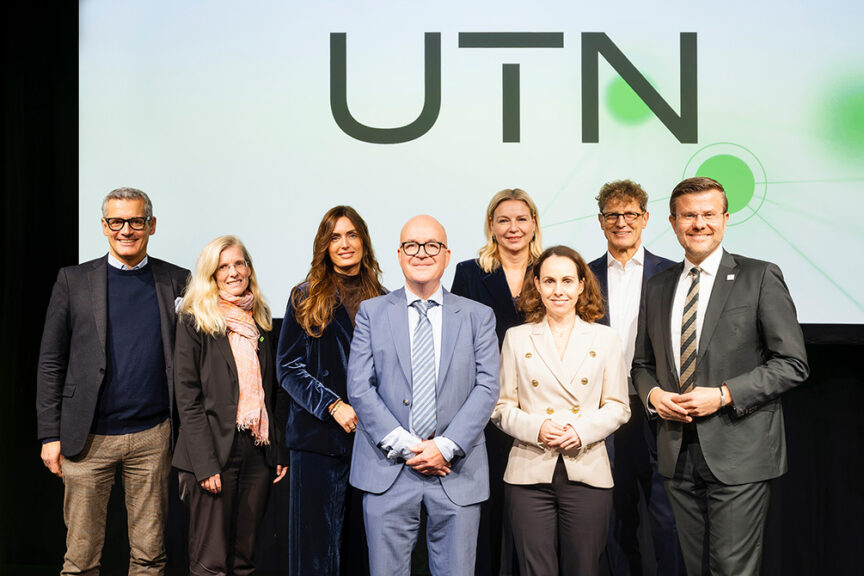
The UTN’s Founding Executive Committee with guests from the Bavarian Ministry of Science and the City of Nuremberg; Copyright: Uwe Niklas
About the University of Technology Nuremberg
The University of Technology Nuremberg (UTN), founded in 2021, is the first newly established public university in Bavaria since 1978. The UTN is a living laboratory building a university for the age of AI and the rapidly advancing changes in technology, business and society. The UTN strives to become a strong regional force in research, teaching and transfer and an internationally leading university of the 21st century with regional roots and a global outlook.
The 37-hectare, sustainable UTN campus will form the center of the new Lichtenreuth district in Nuremberg, close to the historic city center. Around 6,000 students, 200 professors and at least 2,000 employees will study and work there. Study programs will integrate aspects of technology, liberal arts, social sciences and natural sciences to ideally prepare students for the interdisciplinary requirements of the new world of work.
Contact
Peter Diehl
Communication Unit