
© AdobeStock/laStockVision
Identification of Populistic Emotionalization Using a Hybrid AI-Approach
Digital disinformation is increasingly displacing fact-based debate with emotionally charged and alarmist messaging. This contributes to the polarization of public discourse and can weaken democratic debate. The research project examines the linguistic patterns that make weakly supported claims appear convincing and deflect attention away from rational discourse.
To this end, the researchers are building and iteratively analyzing two text corpora, meaning that the findings from each analysis inform subsequent stages of the research. The first corpus comprises ancient texts on rhetoric and argumentation, including works by Plato, the Sophists, and Isocrates, which display and reflect upon manipulative forms of speech. The second consists of contemporary populist communication formats, including social media posts, podcasts, campaign speeches, and press conferences in both German and English. At a later stage, the corpus will be expanded to include additional European languages.
By comparing the two corpora, the team of researchers at UTN identifies characteristic linguistic features of manipulative and emotionally charged communication. Building on these findings, they also investigate how misleading patterns of argumentation can be recognised and effectively countered. Their analysis also extends beyond the linguistic and discursive levels to the ethical assumptions and broader worldviews that may shape individuals’ responses to disinformation. These insights will, in turn, inform the development of educational approaches aimed at strengthening critical reflection and resilience to manipulative communication.
From the technical perspective, the consortium employs an innovative hybrid approach based on explainable artificial intelligence (XAI). It combines powerful transformer-based large language models with inductive logic programming. This enables the AI not only to detect linguistic patterns but also to explain transparently how it arrives at its conclusions. The resulting linguistic features are continuously refined alongside advances in the AI models and validated through pilot studies. They are then integrated into a practical toolchain, including a web application.
In the long term, the consortium aims to develop methods for detecting emerging forms of disinformation at an early stage. The project will also produce openly available teaching and learning materials (Open Educational Resources, OER) as well as educational formats for civic education and teacher training. In addition, a toolbox and a range of knowledge transfer formats are being developed for the computer science community. The overall goal is to develop a scientifically rigorous and well-founded understanding of manipulation techniques in public discourse, as well as of effective mechanisms for identifying and countering them. These insights should be made explicit and translated into technically operationalisable concepts, thereby establishing explainable artificial intelligence as a possible support form for strengthening societal resilience and promoting well-informed public discourse.
Project Overview
Collaboration Partners:
Gyburg Uhlmann, Professor of Classical Philology and Greek Studies, University of Technology Nuremberg (Consortium Coordinator)
Prof. Dr. Ute Schmid, Cognitive Systems Group, University of Bamberg
Anna Sarah Lieckfeld, German Informatics Society (Gesellschaft für Informatik e.V.), Berlin
Dr. Nikolai Horn, iRights.Lab GmbH, Berlin
Ariane Huster, Eduversum GmbH
Project Title: DeMasKI – Disinformation and its Patterns: Identification of Populistic Emotionalization using a hybrid AI-Approach
Funding: Vertrauen in Demokratie und Staat: Digitale Desinformation erkennen und abwehren (BMFTR)
Project term: 01.03.2026 – 01.03.2029
Visit the Project Website (External, German only)
Team
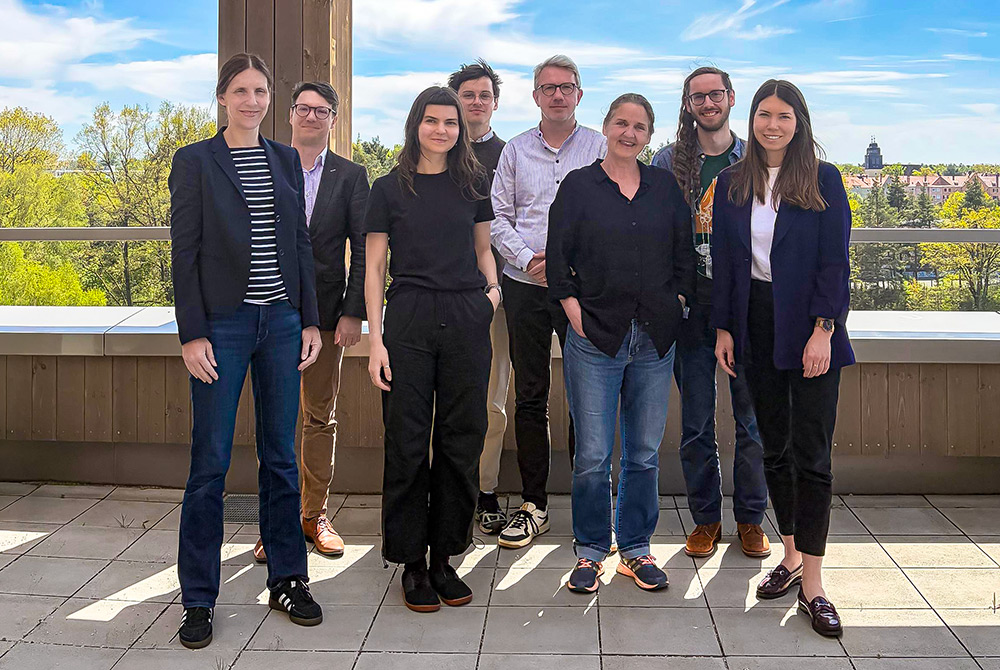
The following researchers represent UTN within the DeMasKI project.
For general inquiries about the project, please contact info@demaski.de.