

The Department of Liberal Arts and Social Sciences (LiAS) brings together key areas of human cognition and its relationship to artificial intelligence, sustainability and energy, as well as political communication and AI. This contributes significantly to UTN’s strategic focus on artificial intelligence. The department combines empirical social science methods with philosophical and historical reflection, hermeneutic approaches, and mathematical modeling.
Together with the Department of Computer Science and Artificial Intelligence (CSAI), LiAS further develops methods in generative AI and applies them in both research and reflection. Key areas include the interaction between human and artificial intelligence, the development of sustainable energy systems, and the analysis of political communication in the age of AI.
DeMasKI – Disinformation and Its Patterns
Identification of Populistic Emotionalization Using a Hybrid AI-Approach
Digital disinformation is increasingly displacing fact-based debate with emotionally charged and alarmist messaging. This contributes to the polarization of public discourse and can weaken democratic debate.
Intelligence in Historical Perspective
Concepts of Human Cognition, Imagination, and Wisdom in Historical and Intercultural Comparison
Interdisciplinary conference at the Department of Liberal Arts and Social Sciences at the University of Technology Nuremberg (UTN).
Date: November 19–21, 2026
Call for Abstracts – Workshop “Knowing by Example”
The workshop warmly welcomes contributions from Classicists, Sinologists, Judaists, Medieval and Early Modern scholars, philosophers, historians of science, epistemologists, and researchers from related disciplines. We invite applications from advanced PhD candidates to senior researchers and particularly encourage contributions that engage across disciplinary and cultural boundaries.
Human Cognition and AI: Psychology and Philosophy
Generative artificial intelligence has revived the question of what intelligence actually is. This is not only about whether and in what sense artificial intelligence can be called intelligent. It also raises the question of what forms of human cognition exist and how AI tools can meaningfully support them. With robots as a form of embodied artificial intelligence, the relationship between intelligence, action, autonomy, and responsibility is also coming more clearly into focus.
UTN conducts research on human cognition with expertise in philosophy, psychology, social sciences, computer science, and mathematics. In doing so, historical and analytical methods are combined with empirical social science, cognitive science, neuroscience, and mathematical methods and brought into the discussion for technology development by the Department of Computer Science and Artificial Intelligence.
At the Department of Liberal Arts and Social Sciences, the following research groups are working together with the AI research groups of the Department of Computer Science and Artificial Intelligence on these questions:
Philosophy of Science & Formal Epistemology
Prof. Dr. Miklós Rédei, Visiting Professor
Sustainability and Energy: Mathematics and Economics
The department brings together applied mathematics and economics to develop models for more efficient and robust energy systems. The focus is on discrete optimization methods that structure networks and markets under uncertainty and enable robust decisions. Together with computer scientists at the CSAI Department, synergies are created between generative artificial intelligence methods and discrete optimization to analyze complex scenarios and develop innovative system solutions.
Political Communication and AI: Communication Studies and Political Science
The digital transformation and the breakthrough of generative AI are fundamentally changing the political public sphere and democratic opinion-forming. AI-supported disinformation, deepfakes, and automated campaigns are increasing pressure on democracies and requiring new forms of resilience. At the same time, these same technologies are opening up new opportunities to expose manipulation and better understand public debates. In the Department of Liberal Arts and Social Sciences, communication studies and political science are investigating these dynamics and developing approaches to protect and further develop democratic processes in the age of AI.
Career opportunities
Our department is growing and offers attractive opportunities for an academic career. We are looking for motivated individuals for professorships and doctoral positions who are eager to actively contribute to research and teaching. Current openings can be found on our careers page.
Education
The department plays a key role in developing the interdisciplinary master’s program Human and Artificial Intelligence. The English-language program combines computer science, psychology, and philosophy, providing both technical foundations in artificial intelligence and an understanding of its applications and impact on society and the economy. Interdisciplinary projects and research-oriented teaching foster the development of innovative solutions.
Learn more about the master’s program Human and Artificial Intelligence
Networking and Collaboration with Other Universities
Our department works closely with universities and research institutions in both research and teaching. If you are interested in collaborating with us, we would be pleased to hear from you:
Contact



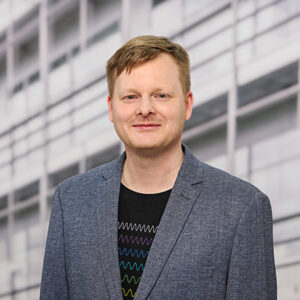
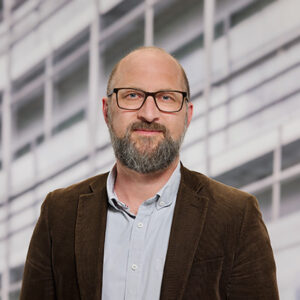
PD Dr. Bernhard Pastötter
Head of the Human Cognition and Neuroscience Laboratory- Telefon: +49 911 92741662
- E-Mail: bernhard.pastoetter@utn.de