
A Campus for the Future – Sustainable, Urban, Connected
In the southern part of Nuremberg, we are creating a campus for the future: sustainable, urban, and connected. The University of Technology Nuremberg is developing a location where modern teaching, outstanding research, and vibrant city life come together. More than just a physical space, the campus will serve as an open environment for exchange among students, staff, and the broader community.
The development site for the new campus stretches between Brunecker Straße and Münchner Straße in the southern part of the city, on the grounds of the former Südbahnhof. UTN has approximately 37 hectares available at this location. Right next to the campus, the new Lichtenreuth residential district is also taking shape.
Here, an integrated campus university is growing within its urban surroundings, offering short distances between living, learning, working, and leisure. Once fully developed, the campus will accommodate around 6,000 students, 250 professors, and approximately 2,000 staff members.
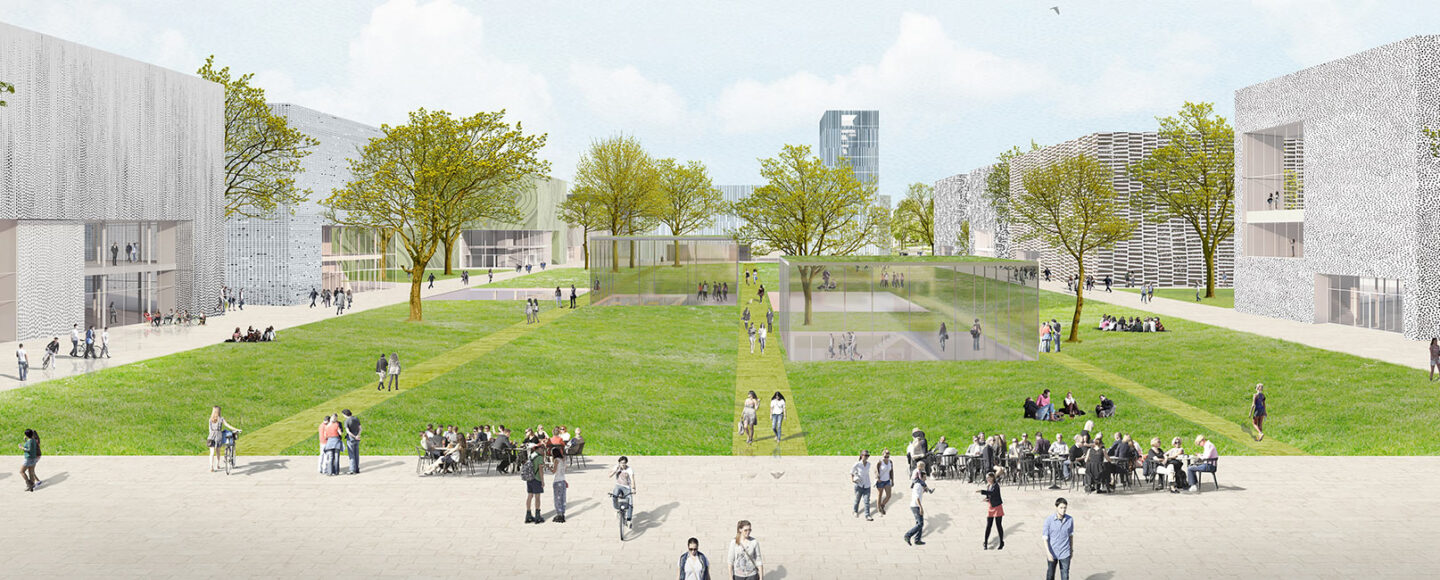
Key considerations in the structural and master planning process included mobility, climate neutrality, sustainability, energy, nature and species conservation, as well as urban spatial design. The campus layout places departmental buildings around a central green space: an inviting, park-like area that will become a future gathering place for students, scientists, and the public.
Location Map of Nuremberg
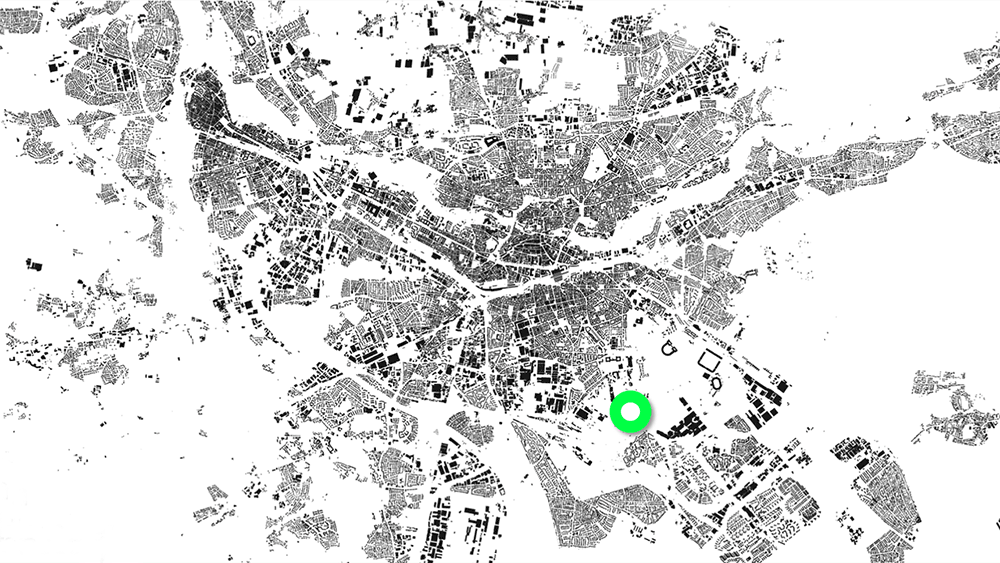
How Large is the Campus?
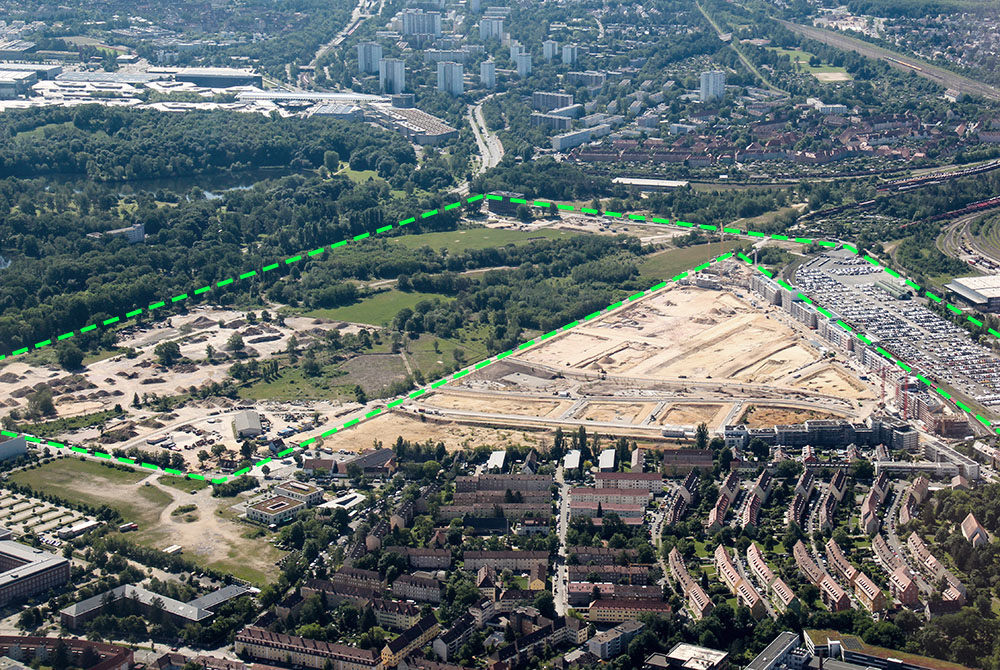
From Rail Yard to University Campus
After completion of the access road, construction of the first building—Cube One—began in 2021 in the southern part of the site. Cube One was opened in fall 2024 and marks the starting point for UTN’s physical development.
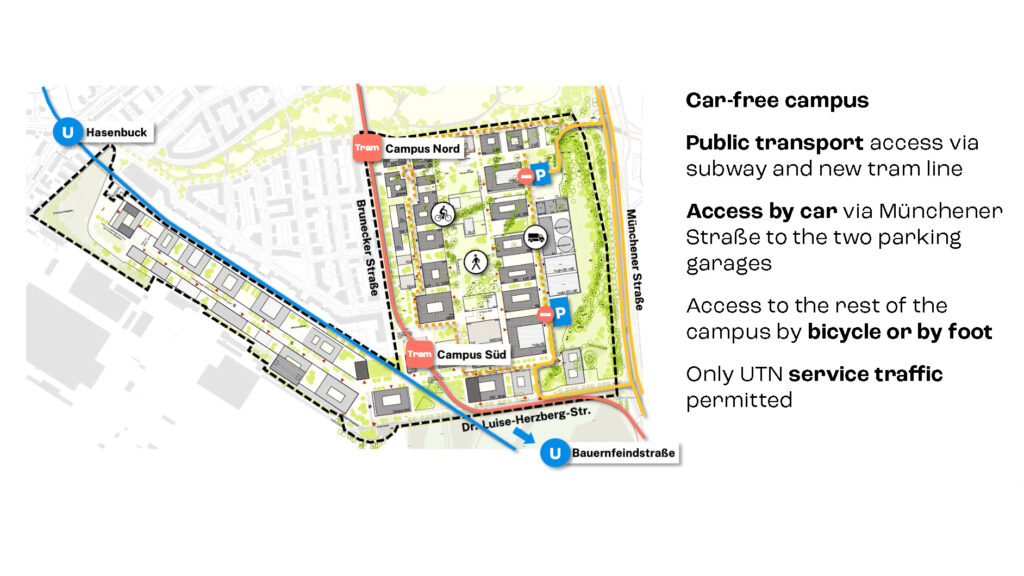
The rest of the campus is being developed from north to south, beginning with the founding buildings. These include spaces for departments and research, as well as administrative units. A parking garage and an energy and logistics center with an innovative heat storage system are also being built. The UTN site offers excellent public transport connections, with direct access to both the subway and the new tram line. Two new stops—one in the north and one in the south of the campus—are being constructed on the site.
Transportation and Access Concept
Building Sustainably: From Contaminated Soil to a Climate-Friendly UTN Campus
Every step on the new campus is planned with care: contaminated areas are checked and cleaned up, habitats for protected species are preserved and new ones are created. At the same time, the design of buildings, operations, and mobility focuses from the very beginning on climate protection and the responsible use of resources. This creates a campus that combines safety, environmental care, and long-term sustainability.
Preparing the Ground for a Safe and Clean Campus
Before the new UTN campus can fully take shape, the soil is examined with great care. The area was heavily bombed during World War II and remains contaminated to this day. On behalf of the State Building Office Erlangen-Nürnberg, specialized companies carry out the clearance of unexploded ordnance with precision and caution. For this work, the top layer of soil must be removed and inspected across large parts of the site. During the process, every effort is made to preserve as many existing trees as possible —but safety always comes first. Only when no ordnance is found and the removed soil layers are free of harmful substances can they be reused.
Development in Harmony With Nature and Resources
The construction of the new UTN campus is guided by a responsible use of the environment and available land. All activities that affect nature and biodiversity are coordinated early on with the construction process. This helps preserve habitats wherever possible and keeps impacts on animals and plants to a minimum. External environmental experts from WSP E&IS ensure that all nature and species protection requirements are reliably met and that valuable species and their habitats are safeguarded as effectively as possible during the construction phase.
New Habitats for Protected Species
Among the protected species living on the campus site is the sand lizard. To help safeguard its population, the landscape planning office WGF Landschaft Nürnberg carefully collects the animals before construction begins. Artificial shelters are placed in suitable areas to offer hiding spots and make the lizards easier to locate. The animals are then relocated to carefully selected compensation areas, where new, high-quality habitats are created specifically for them.
Careful Handling of Contaminated Soil
At the same time, Genesis Umwelt Consult examines and evaluates the previously contaminated areas. Materials that are considered safe are reused on site whenever possible. Only soil that is truly contaminated is removed and disposed of at appropriate facilities. Step by step, this approach creates a campus that keeps people, nature, and resources in focus.
Our Roadmap to Climate Neutrality
Climate protection plays a key role in building UTN. As a newly founded university, we can make decisions from the start that shape the campus, operations, IT, and mobility in a sustainable way. A comprehensive climate action plan — developed together with an external sustainability consultancy — outlines how we can move systematically toward emission-free operations. It provides the strategic foundation for making our long-term development climate-friendly.
Our Buildings: Sustainable Architecture Meets Modern Use
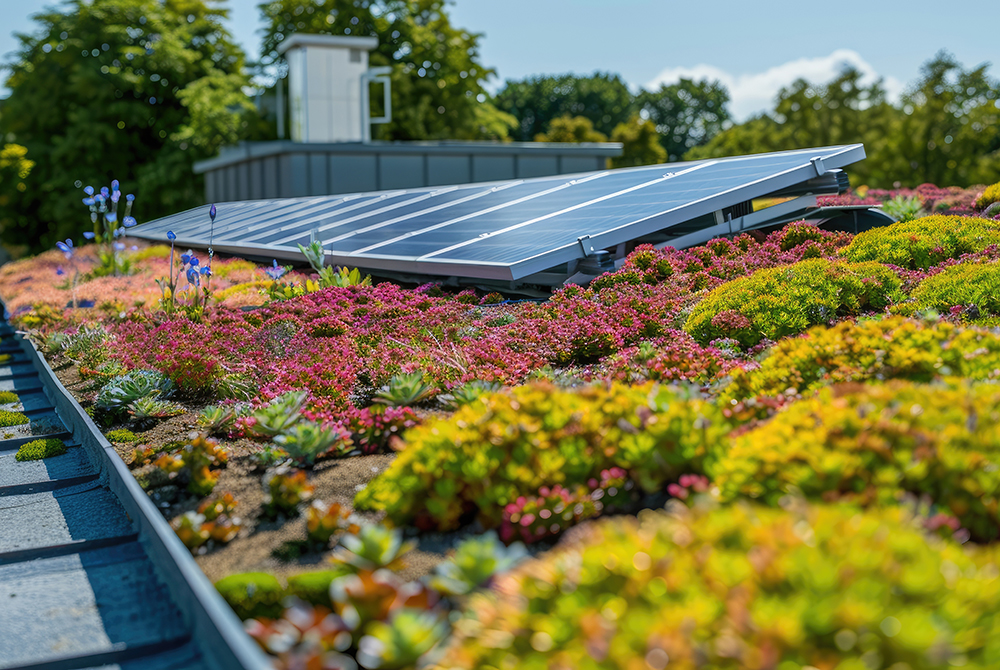
The UTN campus is designed for CO₂ neutrality through a sustainable building concept and efficient energy management. Ecological materials are used whenever possible. All buildings will be equipped with photovoltaic systems to achieve a high level of energy self-sufficiency. Green roofs and facades help improve the urban climate and reduce environmental impacts.
Cube One – The Starting Point of Our Campus Vision
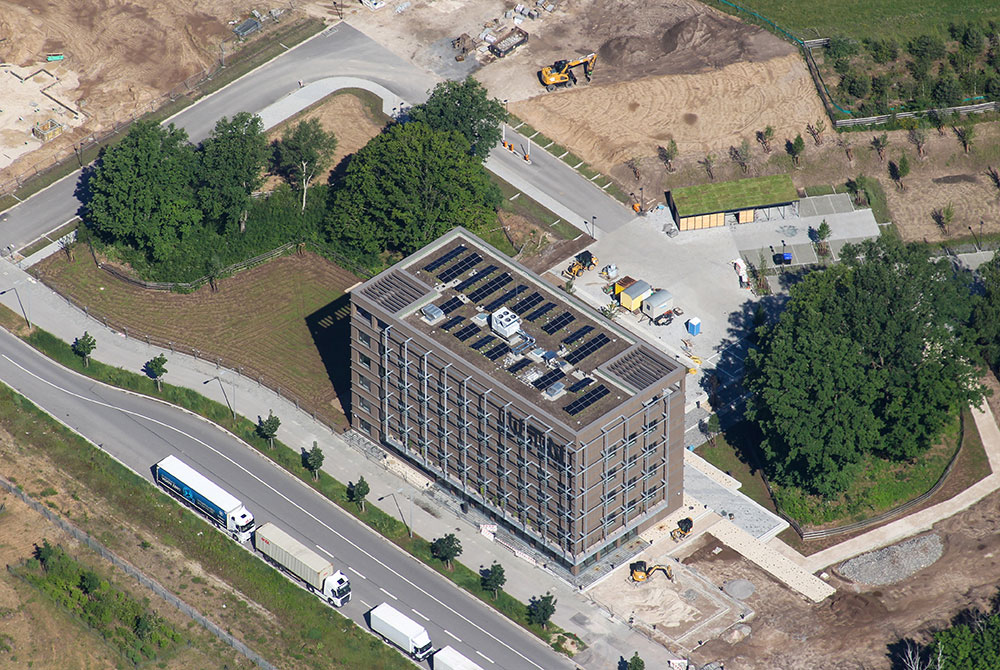
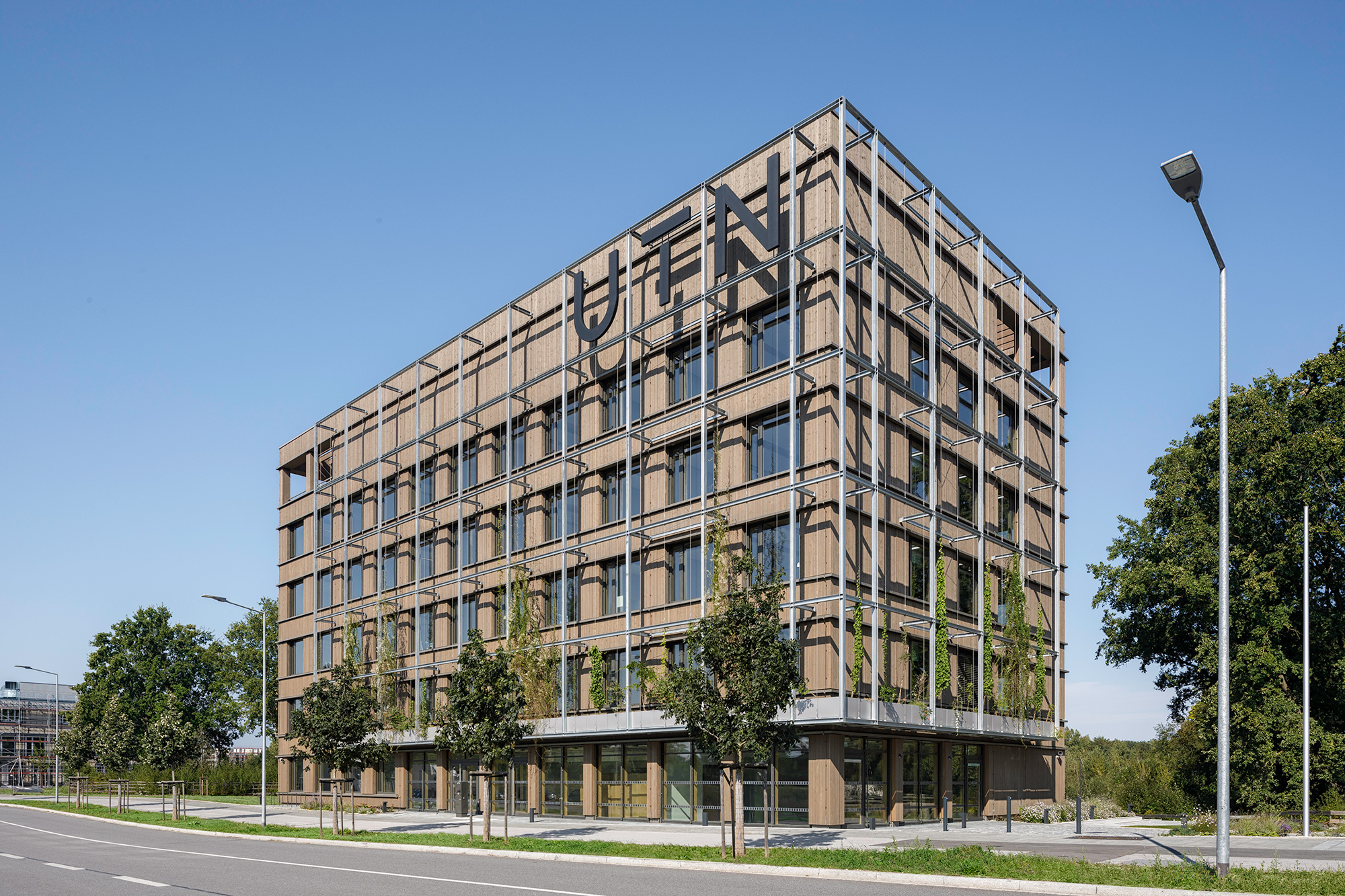
With the completion of the first building on the campus — Cube One — UTN was able to move parts of its administration and the Executive Board to the new site on Dr.-Luise-Herzberg-Straße for the first time. The building is designed as an innovative hybrid timber structure: its core, including ancillary rooms, stairwells, and the elevator shaft, is made of recycled concrete, around which a six-story timber construction has been built. The facade features pre-weathered spruce cladding.
Cube One includes climbing structures for facade greenery on two sides of the building, as well as a green roof that also supports the photovoltaic system. The plants provide natural shading in summer and enhance indoor comfort. Through evaporative cooling, they also act like a natural air-conditioning system for the surrounding area. The green roof offers an additional functional benefit: it prevents the technical systems — including the photovoltaic modules — from overheating, enabling more efficient operation.
Aerial View of Cube One
Facade Greening
Learning Hub – A Central Destination for Pioneering Teaching
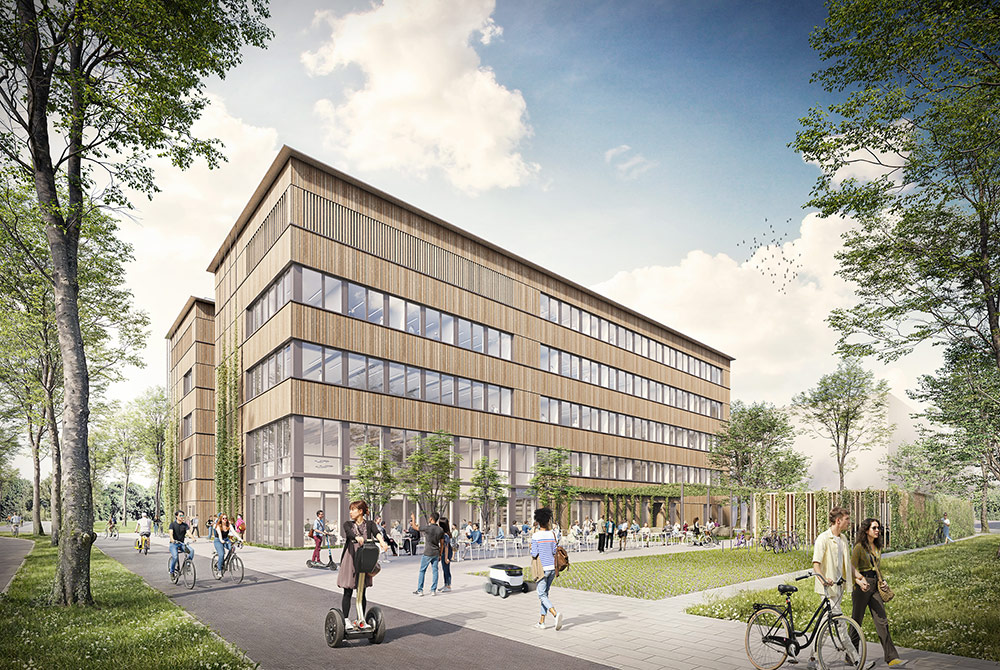
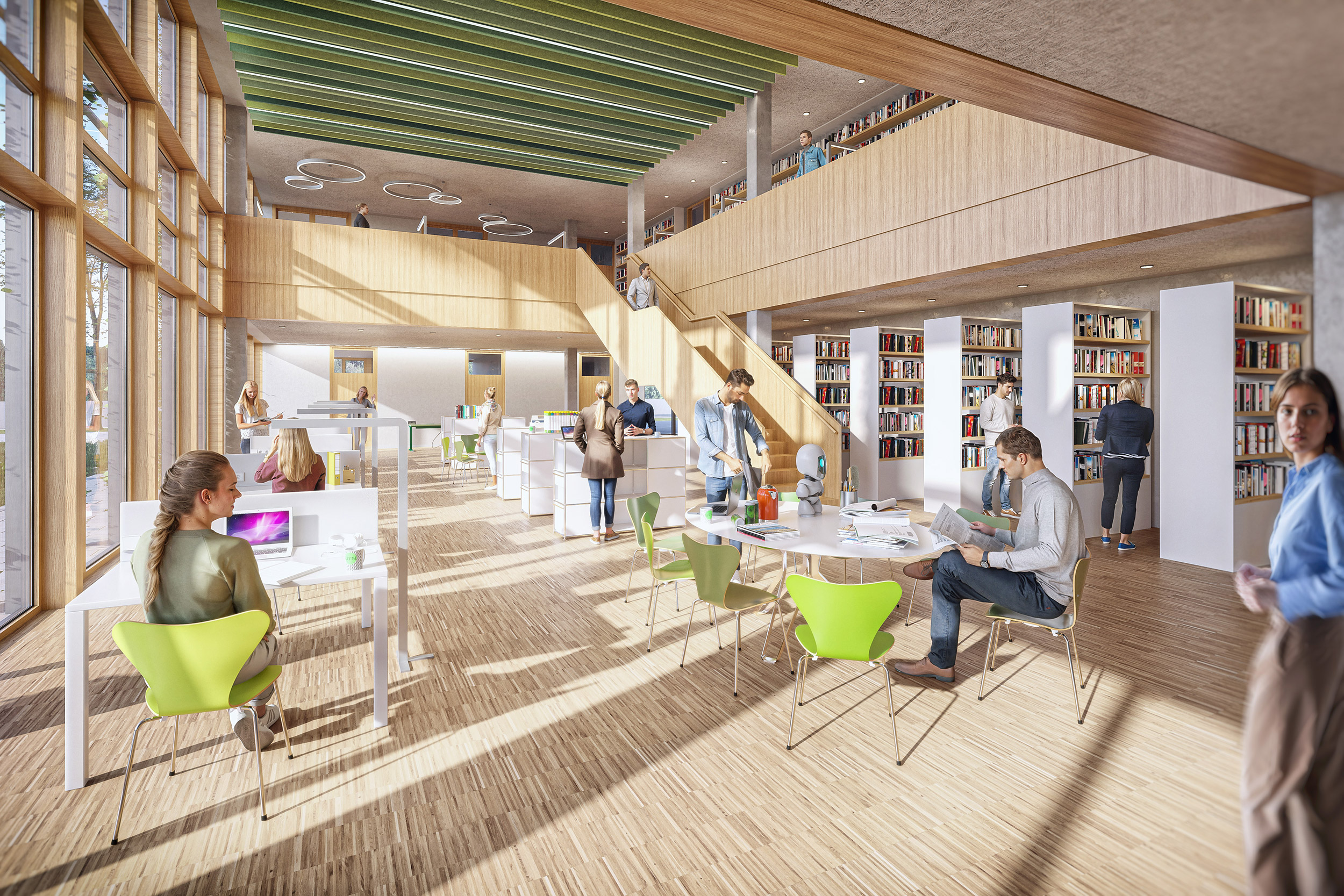
The Learning Hub adds a central space for modern learning and interaction to the campus. It will open for the winter semester 2027/28 and create the additional space UTN needs, including for the launch of its new bachelor’s program in Artificial Intelligence. The Learning Hub’s 3,700 square metres of floor space will be used to create numerous new learning and meeting spaces across five floors: active learning classrooms, group work rooms, open communication zones, a library learning center and a cafeteria. These facilities will be complemented by flexible, informal learning areas. The building will have a total capacity of up to 1,100 people.
The Learning Hub will be certified according to the BNB Silver Standard and combines modern functionality with sustainable construction. Located in the southern part of the campus on Dr.-Luise-Herzberg-Straße, it connects directly to Cube One and the modular building provided to the Ohm.
Learning Hub Visualization
Open Interior Space
Founding Buildings – A Home for Excellent Research
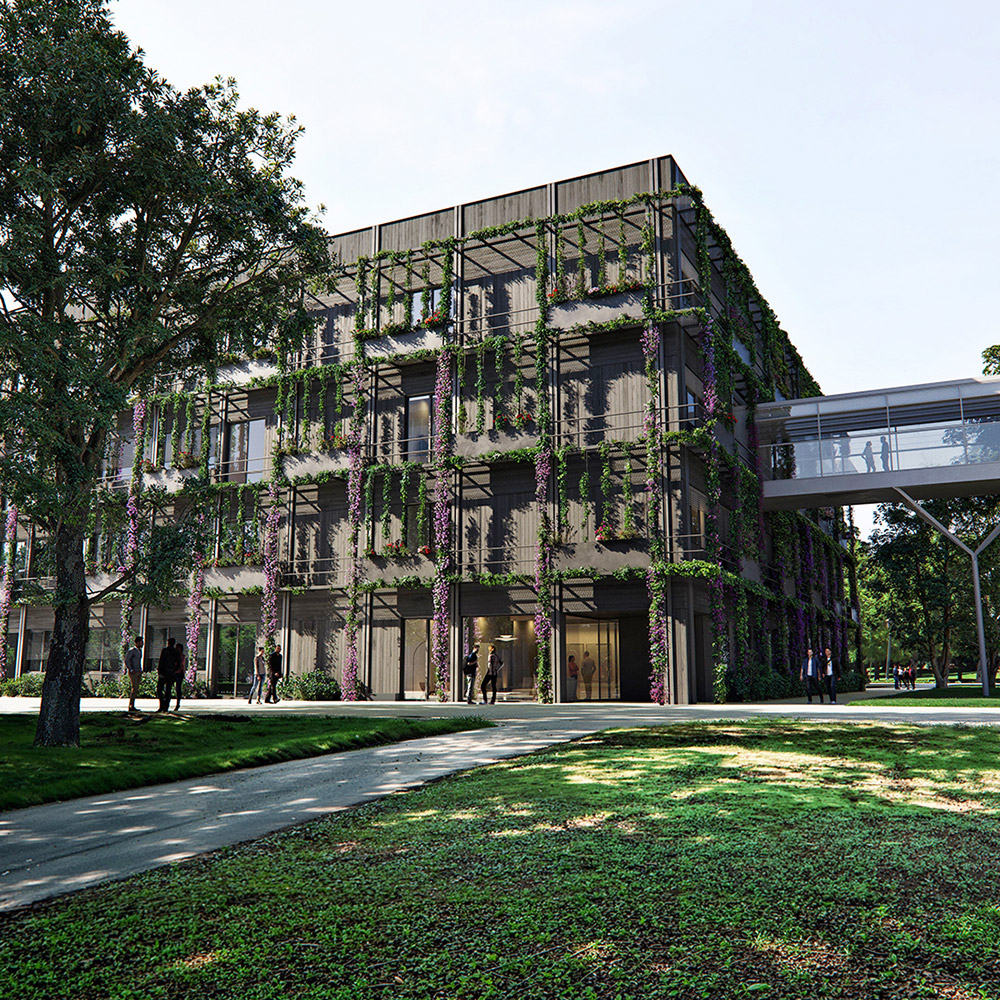
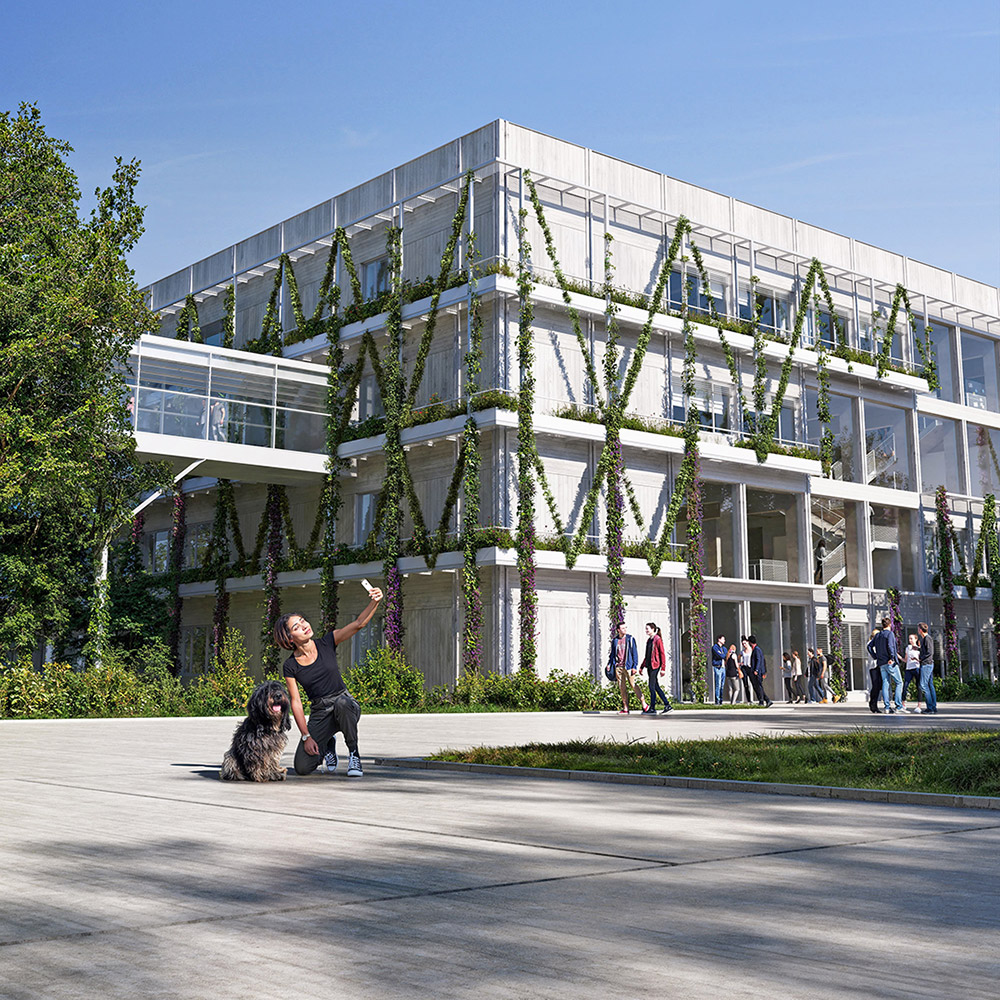
The five founding buildings mark the starting point for campus development in the northern area, which is expected to be completed by 2030. Representative of this first phase are the new buildings for Mechatronic Engineering (ME) and Computer Science and Engineering (CSE), which will provide space for studies, research, and a wide range of learning formats. They will offer dedicated areas for students and parts of the departments, with teaching and learning spaces facing the green campus center, while laboratories and offices are arranged along the outer sides of the buildings. A bridge connecting the ME and CSE buildings highlights the strong interdisciplinary exchange.
The ME building includes technical and physical equipment labs and an experimental hall, centered around a distinctive “knowledge staircase” that serves as a key communication space. The CSE building focuses on software and hardware development as well as test setups in the field of image processing. Both buildings — like Cube One and the other founding buildings — demonstrate how sustainable architecture can be achieved: through timber facades, climbing structures for green walls, timber frame construction, and recycled concrete in highly stressed areas.
Computer Science and Engineering
Copyright: Telluride Architektur | Bilder: Beauty & The Bit
Mechatronic Engineering
Copyright: Telluride Architektur | Bilder: Beauty & The Bit